Showing posts with label poverty. Show all posts

Saturday, 7 July 2012

Cultural diversity is no easy game

When people think of Africa as a continent, they often envisage poverty, hardship & people living in what they would deem as relative ‘squalor’. This of course is not the case for everyone but as we know only too well, it is increasingly prevalent and recent statistics suggest it is the sad reality for more than half of the population in Africa. South Africa holds 50% of its people haunted below the poverty line and in most towns and indeed larger cities, there will be at least one substantial if not numerous townships scattered outside the buzzing metropolis.


Townships (otherwise known as slums, shantytowns, squatter camps, or, if like me you prefer the less derogatory term, rural communities) as you can see above can vary from dirty and impoverished to quite cheerful looking yet basic settlements. They were first constructed during the Apartheid era, where it is was critical for government to separate the blacks and whites and keep them in designated areas. It was the infrastructure and western technology brought over from overseas whites that created the cities while the ‘informal settlements’ were created for the black populations outside of the city centres where it was still possible for it’s inhabitants to find work. As you can imagine, the settlements grew with accelerating momentum and before long had soon exploded and become firmly recognized homes for hundreds of thousands of people.


The townships across South Africa today are still as distinctive as they once were, despite Apartheid now firmly revoked. They are predominantly, if not entirely occupied by black citizens and the way these people live their lives is not dissimilar to how it would have been 40, 50 years ago. The only crucial difference now is that freedom has entitled a population to no longer feel shackled by oppression.


But was Apartheid unreservedly a bad policy? Of course that is a rather controversial question to pose, but I can’t help but weigh up the pros and cons of that time. I find, and will continue to find Apartheid a morally abhorrent period in history but it doesn’t mean that we can’t analyze it. The way Apartheid was handled was sickening and the treatment of millions was unforgivable. On the other hand, and forgive me for sounding dispassionate, what prevailed as a result was a far more controlled country than is true today.

The government were on such high guard that they were ruthlessly strict, crime was controlled in a similarly rigorous fashion and the municipalities were run far better. Yes -the blacks got their freedom and damn right too but the ramifications for South Africa today is corruption and wrongdoing. South Africa as a country appears to be one of organized chaos and it is a shame to reflect and comprehend that in reality, during Apartheid the country was in fact just organized. People will argue that this so called ‘organization’ was organized brutality and inhumane segregation, and for the most part I agree; but in scrutinizing the situation however, I now find myself failing to see the situation in such absolute terms.


Monday, 7 May 2012

Is the world creating our stress levels?

'Stress and pressure creates diamonds from nothing more than coal-does this mean that a stressful and pressured life will create a richer world?'

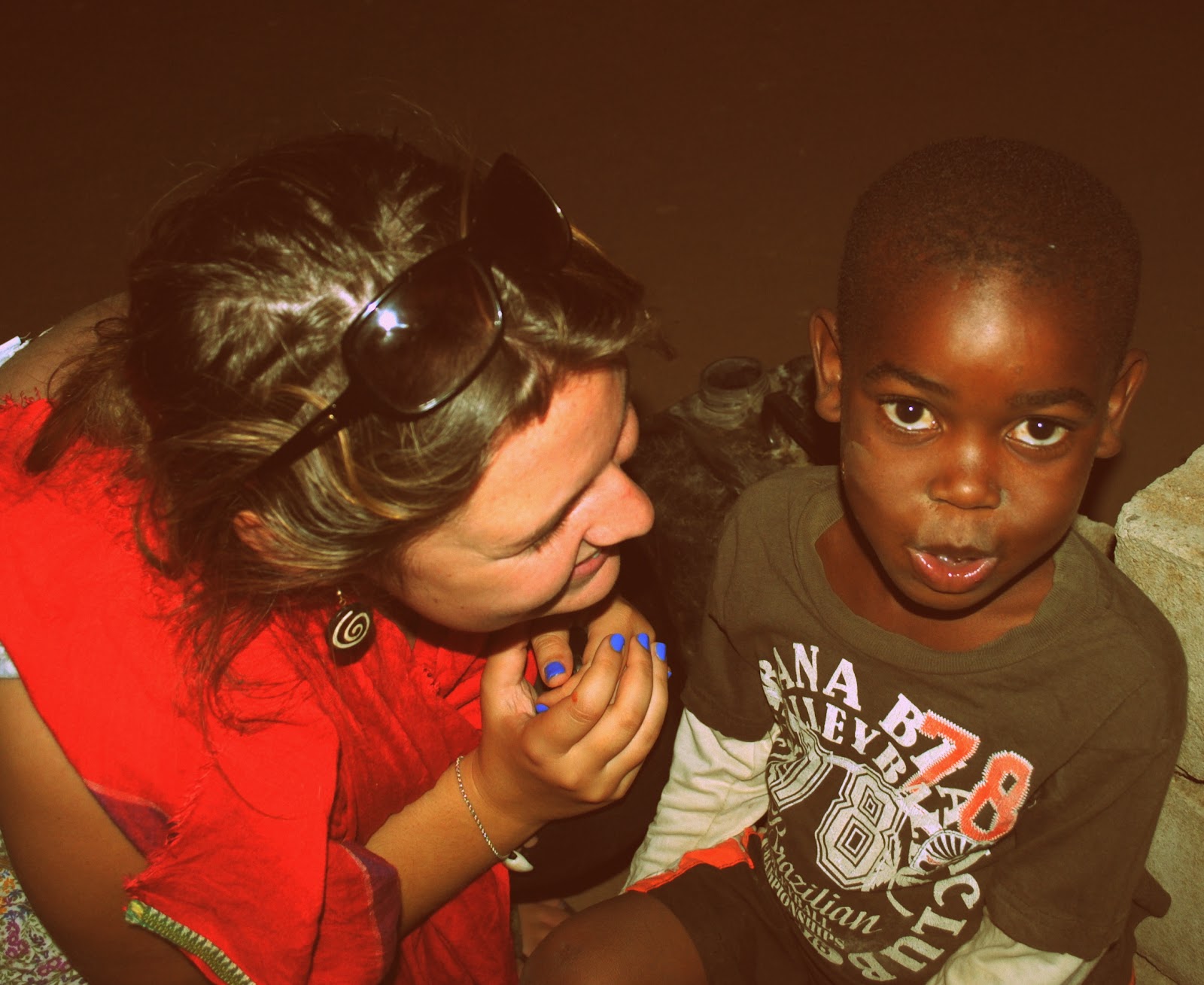
After being in South Africa for over 4 months now, I’ve been fortunate enough to experience a life that is somewhat a contradiction to my own. I have explored townships and rural communities and the people that inhabit such homes. Aside from the understandable poverty that so many people have to live with, the major difference I notice is in the mentality of the individuals.


The lives couldn’t be more different to my life back in London.  London is bustling -teeming with people, noises and smells. I love this chaos as have gotten used to it as part of my life for as long as I can remember.  The South African communities and townships too have their personal sounds and aromas, but the way of life appears to be more relaxed. Well, on the surface at least. Maybe this is due to the fact that less people are working; maybe this is because there are fewer reasons to rush around like we do in the UK.  Or maybe it’s just in the African culture to slow down a bit. But what I have been thinking about lately is; do these people actually feel less anxiety or sadness that others do just because their lives ‘seem’ to be less pressured?


What is saddening me about the Western world is the increasing burden that seems to be overshadowing so many of us these days. I feel that we are absorbing so much negativity that comes from the media; be it TV, the news and the internet to more subconscious ways such as billboards and flash-by signage. I think it’s because of this perpetual bombardment that people often feel anxious for reasons that they can’t even explain.

We all know that mental health statistics are rising, but have you ever stopped to think that these statistics are those that arise from people brave enough to admit they have a problem; what about the others who are too scared or too proud to ask for help? What about those people who don’t understand what ‘anxiety’ or ‘depression’ are, like I’m sure is the case for a lot of people in rural South Africa? There are numerous reasons why people suffer from mental health problems (MHPs); those of which I’m not going to elaborate on, but what I believe could be a contributor to some of these problems is the subliminal weight we feel from our ever relentless world.  While some might not agree, I believe that everyone in the world is feeling this weight. Whether you are in a high pressured job in London or living in a tree house in an indigenous tribe in Papua New Guinea, I think the world has the ability to affect us all. 


There was a fascinating phenomenon that arose after the 9 11 terrorist attacks; the vibrations of sadness that overwhelmed so much of the world at that time were so intense that they could be measured on the Richter scale. Since this discovery, people are now taking part in synchronised music and dance festivals for peace; at periods of time at various locations in different countries, thousands are coming together in an attempt to create more positive waves across the world. For more information, see www.earthdance.org


So all I want to leave you with (without sounding too soppy) is that wherever you are in the world, whatever life you lead, you’re not alone. I’m in no way demeaning the fact that there is clear individual struggle in the world, from poverty to mental illness, but in one way or another, are we perhaps all feeling similar emotions at certain points in our lives?


SITE DESIGN BY DESIGNER BLOGS